I have crocheted left-handed for about thirty-five years, and for most of that time I assumed the ache at the base of my left thumb was simply the cost of a hobby I loved. I taught myself at twenty-nine from a library book propped open in front of a mirror, because nobody within driving distance crocheted the way I did. Plain aluminum hooks did the job. They were cheap, they were everywhere, and I owned the same set for three decades. What they were not was kind to a hand that had been curled around one for an hour on a cold evening.
I bought the Clover Amour set in September 2025. Ten hooks, B-2.25mm through J-6.00mm, each one a polished aluminum hook set into a soft, warm-to-touch grip. Fourteen months later they are still the only hooks in my bag, and the G-4.00mm and the H-5.00mm do most of the work. The rest of my crocheting happens in a small armchair by the front window, on baby blankets, dishcloths, hats, and a shawl every second winter. What follows is what held up, what never stopped bothering me, and who I think should spend the money.
The Quick Verdict
Fourteen months of near-daily work and my hand still reaches for these first. No case, chunky handles, real money, and I would buy them again tomorrow.
Amazon Check Today's Price →The hooks I stopped thinking about two weeks in
Ten sizes, B-2.25mm through J-6.00mm, on polished aluminum, with a soft grip that has not worn through fourteen months of daily use. Today's price and the full size list are on the Amazon page.
Amazon Check Today's Price on Amazon →How I've Used It
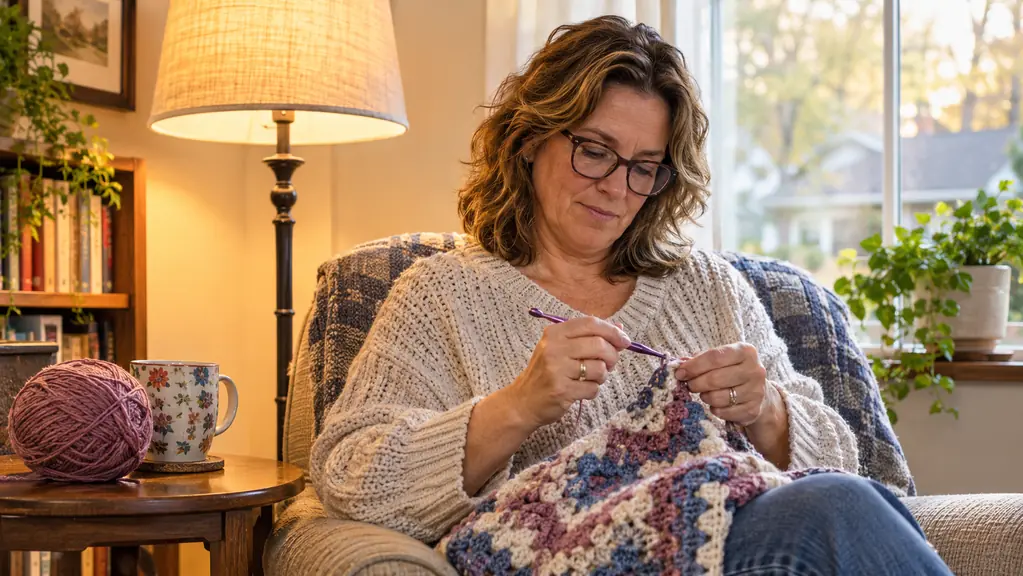
A typical evening is me in that chair with the floor lamp on my left, a project on my lap, and the television on low. The lamp sits on my left because that is where the outlet is, which means my left hand throws a shadow across the stitches I am about to work into. The hooks are a separate matter. I hold the hook in my left hand and work right to left, mirrored from the way a right-hander works, so any tool with a thumb rest sculpted for a right hand, or a handle offset to one side, ends up fighting me by the second row.
The Clover grip does not do that. The shape is symmetrical from top to bottom, so my fingers land where they land and nothing pushes back. I did not realize how much small adjusting I had been doing with the old aluminum hooks until the adjusting stopped. There is no wrong way to pick one of these up, which sounds like faint praise until you have spent three decades turning a tool over in your hand looking for the comfortable side of it.
Within about two weeks I noticed I could work roughly twenty minutes longer before I had to set the project down and rest my thumb. Nothing dramatic. Not a cure for anything. Just twenty more minutes, most evenings, which over the six weeks a baby blanket takes is the difference between a finished edge and a half-finished thing in the corner that you stop seeing.
I still have the old Susan Bates hooks in a kitchen drawer and I am not getting rid of them. They are what I learned on, and there are a few sizes in that bunch these do not cover. But I have not taken one out for a project since the fall of 2025, and I do not expect to.
The Left-Handed Question, Answered Plainly
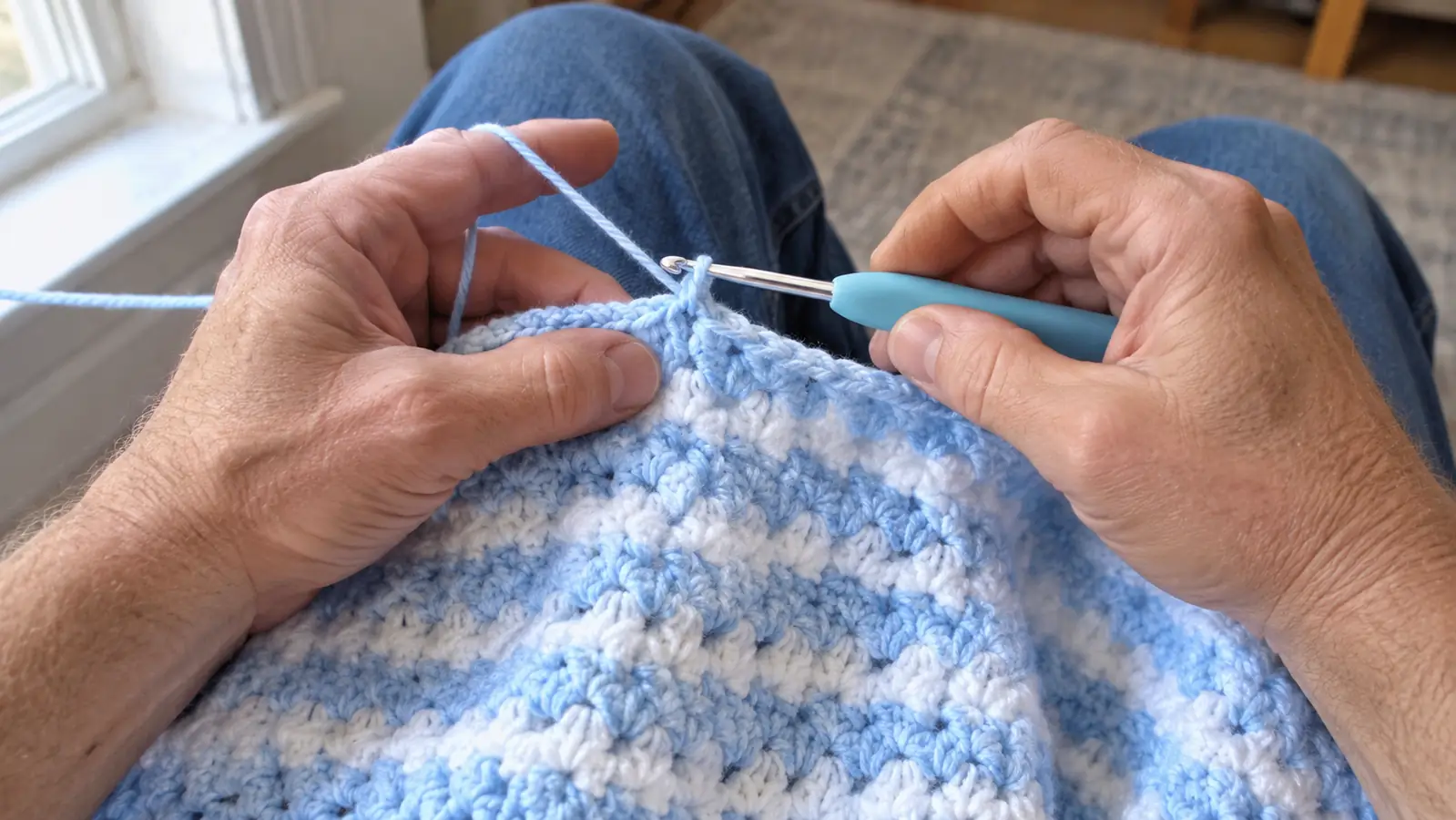
People ask whether left-handed hooks are worth hunting down and paying extra for. On most tools I say yes. On this set I say there is nothing to hunt. The grip is symmetrical and the hook is the same hook whether you hold it in your left hand or your right. No special order, no left-handed version, no upcharge. I have been handed hooks at a yarn shop that were clearly made for someone else's hand, and these are not that.
Crochet is forgiving in a way knitting is not. A knitting pattern has to be read backwards and every decrease leans the wrong way, and there is no getting around it. With crochet I read the row and work it from the other side, and the hook does not care in the slightest. What I needed was never a left-handed hook. It was a handle my hand could hold for an hour without complaining.
One limit worth knowing before you order: the set runs B-2.25mm through J-6.00mm and stops there. If you work afghans in super bulky yarn with an enormous hook, you will still be digging in the old drawer for it. I make baby blankets and dishcloths, so the range covers everything I do. A chunky throw in a big box store yarn would not.
What Fourteen Months of Daily Work Did to Them
The polished aluminum is still smooth on every size. No burrs, no rough spot where the metal meets the grip, nothing that catches a strand of cotton and splits it halfway across a row. I once owned a hook that picked up a nick in its first season and then snagged every stitch for years afterward, and I kept using it because replacing a whole set felt wasteful. These show no sign of going that way.
The grips have held their texture. They are soft and slightly warm to the touch, not sticky, and they have not gone shiny or tacky the way rubberized handles can after a summer in a hot car. Mine have ridden to my daughter Beth's house in Michigan August heat more than once, packed in a zippered case inside a project bag, and come out exactly as they went in. I can pull any one of the ten out of that case in poor light and know which size I am holding by feel, which matters more at sixty-four than it did at forty.
None of this fixed my thumb. It still stiffens after about an hour, worse when the weather turns, and I will not pretend otherwise. What the hooks bought me was time before the stiffness arrives. In February I started wearing cotton compression gloves with the fingertips open for any session past an hour, and between the two I finish an evening far more comfortably than I did two winters ago. That is comfort. It is not treatment, and I would not tell you it was.
They also did not make me faster or neater. I am the same slow, careful crocheter I was with the old hooks, and my gauge wandered for the first week while my hand figured out the new grip. I had to check a swatch before I trusted the first blanket, which is the sort of thing I would rather mention now than have you discover on your own.
What I Actually Make, and Which Sizes Earn Their Place
The H-5.00mm does the dishcloths. A double crochet dishcloth in worsted cotton takes me about an evening and a half, and I make them in batches for the church winter drive because they are useful and nobody has to guess a size. The G-4.00mm does the baby blankets in a soft acrylic, which is the size most of the patterns call for and the one I reach for without looking.
The larger sizes come out for hats, and the I and the J for the brims and for the shawl I make every other year. The small ones, B through E, sit for months at a time because I do not do thread work and I never took to fine cotton. They are there, and I am glad to have them when a pattern calls for one, but I will not pretend I use all ten equally. You are buying a range, and part of what you pay for is the sizes you rarely touch.
On yarn, the hook slides cleanly through cotton and wool without splitting the ply, and acrylic squeaks a little the way acrylic always does, which is the yarn and not the hook. If you have only ever used the cheap aluminum hooks from a multipack, the difference you notice first is not speed. It is that you stop hearing the yarn drag across the metal.
The winter drive takes most of what I finish. Last year it was fourteen dishcloths, six baby blankets, and a stack of hats in three sizes, and every one of them came off these hooks. That is not an achievement, it is just what a retired person with a chair and a lamp and a comfortable hook gets through in a year.
What the Set Does Not Come With
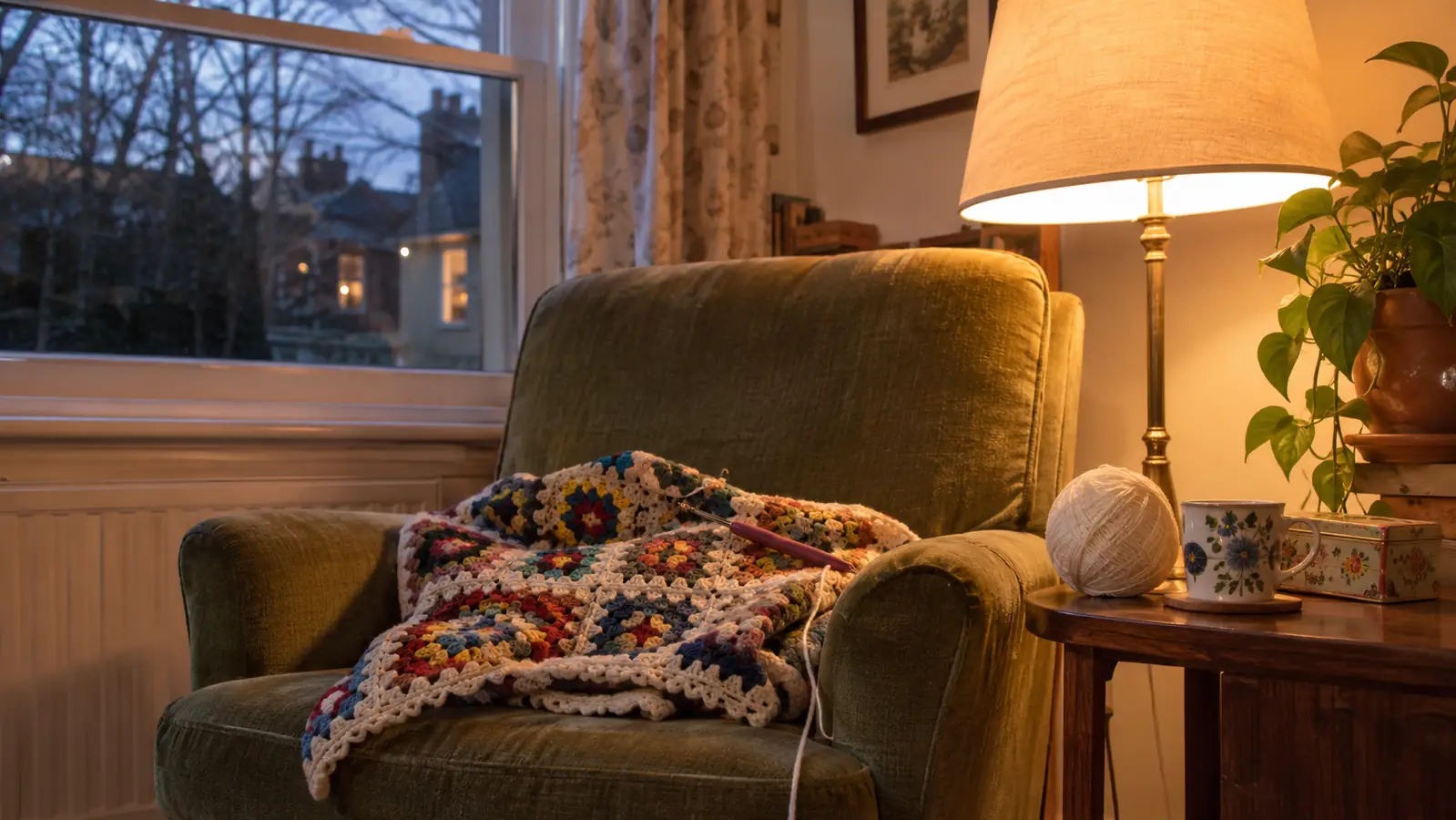
The Clover hooks arrive loose. No case, no roll, no pouch, just ten hooks in a sleeve. Until May of this year mine lived in the bottom of an old canvas library tote beside a skein and a pair of scissors, and I lost count of how many evenings started with me digging for the H. A set this size does not stay tidy on its own, and nothing on the listing pretends it will.
That got solved when I finally bought a proper project bag with a zippered case inside it, and now the whole set lives in that case and the case rides in the bag. If you are buying these, plan for somewhere to put them, or expect to leave them in the sleeve. It is a small thing that turns into a daily annoyance if you skip it.
The other honest complaint is bulk. The handle is comfortable in the hand and clumsy in a small pouch. If you carry one hook and one ball of cotton to an appointment, this is a fat thing to push into a pocketbook. In a full project bag it is a non-issue. In a small purse it very much is not.
Travel is where the set is at its most awkward and its most useful. When Walt and I drive to Beth's, the bag rides in the back seat with the case inside it, and the whole range comes along, which means I never have to guess at what a pattern might need. Away from home the yarn slots on the bag do the job the bowl does at home.
What I Liked
- Grip is symmetrical, so a left-hander needs no special version and pays no upcharge
- Polished aluminum stayed smooth through fourteen months of near-daily use
- Ten sizes, B-2.25mm through J-6.00mm, cover most blanket, hat and dishcloth work
- Soft, warm-to-touch handles have not gone tacky, shiny or worn through
- Each size is easy to tell apart by feel in poor light
Where It Falls Short
- No case, pouch or roll included, so you need to buy something to keep them in
- Handle is bulky in a small project pouch or a pocketbook
- Sold as a full set, so you pay for sizes you may rarely touch
- Stops at J-6.00mm, too small for super bulky yarn
- Real money for hooks if plain aluminum already suits your hand
Twenty more minutes before I had to set the work down and rest my thumb. Not a cure for anything, but over a six-week blanket it is the difference between a finished edge and a UFO.
Who This Is For
If you crochet most days, if your hand gives out before your project does, and if you have been making do with the same hooks since the nineties, this set earns its keep. It is also the easiest thing I can recommend to a left-hander, precisely because there is nothing left-handed about it. And if you are short like me, five foot one, and you work in a chair where your feet do not reach the floor flat, you will spend a great many hours in that chair. A tool that takes one small fuss out of those hours is worth paying for.
Who Should Skip It
If you crochet a few times a year, or your hand is perfectly content with what you already own, keep your money. If you work almost entirely in super bulky yarn, the Clover set stops short of what you need. And if you carry a single hook in a pocketbook, the handle will irritate you every time you reach for it. None of that is a knock on the hooks themselves. It is a mismatch between the tool and the job, and it is cheaper to notice it now than after you have ordered.
Fourteen months in, still the first hook I reach for
Ten sizes on polished aluminum, with a soft grip that has not worn through a year of daily blankets. If your hand is the part that quits first, start here. Today's price is on the Amazon page.
Amazon Check Today's Price on Amazon →