
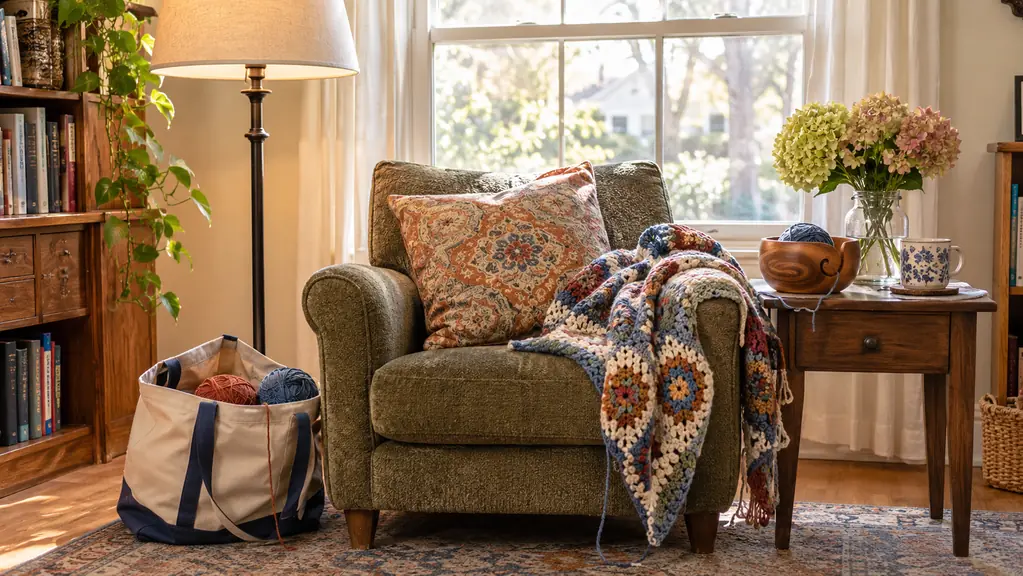
I used plain aluminum hooks for about thirty years. Not out of loyalty. Out of habit, and because nobody at the yarn table ever told me there was anything worth comparing. Then in September 2025 I bought the Clover Amour set, ten hooks in ten sizes, and spent two weeks quietly arguing with myself about whether I had just wasted money. Here is the short version. The Clover Amour and the Susan Bates Silvalume are not really competing for the same job. One is built for long sittings by somebody whose hands have opinions. The other is a plain, well-made aluminum hook that has been doing the work since before either of us was born.
If you are in a hurry, the whole comparison fits in a few lines. Buy the Clover if you sit for more than an hour at a stretch, if the base of your thumb stiffens by the second row, or if you are left-handed and tired of turning every tool around to find the side that was designed for somebody else. Stay with the Susan Bates Silvalume if you work in short bursts, if you would rather own one hook in one size than a case of ten, or if you have used an inline head for decades and that is simply what crochet feels like in your hand. I own both. I still reach for both. Just not on the same evening.
| Clover Amour | Susan Bates Silvalume | |
|---|---|---|
| Grip | Soft, warm-to-touch grip handle over a polished aluminum hook, built to be held for a long stretch | Bare aluminum shaft with no added grip, just the metal |
| Head shape | Tapered head, the stitch slides up and off gradually | Inline head, a straight groove that catches the yarn squarely |
| Weight in the hand | The full set of ten weighs 3.3 ounces, and you feel the handle on every one | Thinner and lighter in the hand, no handle to rest against the palm |
| Comfort past the hour mark | The reason the set exists. I go roughly twenty minutes longer before I stop | Fine for half an hour at the kitchen table, less so for a three hour evening |
| Left-handed fit | Symmetrical grip, nothing to turn around or adapt | Nothing about it is handed, but there is nothing to cushion the hold either |
| Buying one size | Sold as a set of ten, so you commit to the whole run | Sold one at a time, so you buy exactly the size the pattern asks for |
| Wear over years | Aluminum hook under a grip handle, and the handle is the part that ages | A single piece of metal, nothing to split, soften or come apart |
| Best for | Long evening sessions and hands that complain early | Short projects, travel, and crocheters who already love an inline head |
Where Clover Wins
The grip is the entire argument and I am not going to dress it up as anything else. The Clover has a soft, warm-to-touch grip over a polished aluminum hook, and that handle is the reason I can sit down at seven and still be working at half past eight. Before the set, my left thumb started complaining somewhere around the forty five minute mark, and worse in cold weather, which in Michigan is most of the year. About two weeks in I noticed I was going roughly twenty minutes longer before I stopped to rest it. Twenty minutes is not a transformation. It is most of a dishcloth row and half a podcast, and it is the difference between finishing a project in a month and finishing it in six weeks.
The second thing matters more to me than it will to most people, and I want to be plain that this is a left-hander's note. The handle is symmetrical. I hold the hook in my left hand and work mirrored, right to left, and I have spent thirty five years turning tools around to find the side somebody designed for a right-handed stranger. There is no side here. I picked it up and crocheted. That silence, the absence of an adjustment, is worth more to me than any feature printed on a package. It is also why I stopped buying hooks loose and guessing, because for the first time the guessing was over.
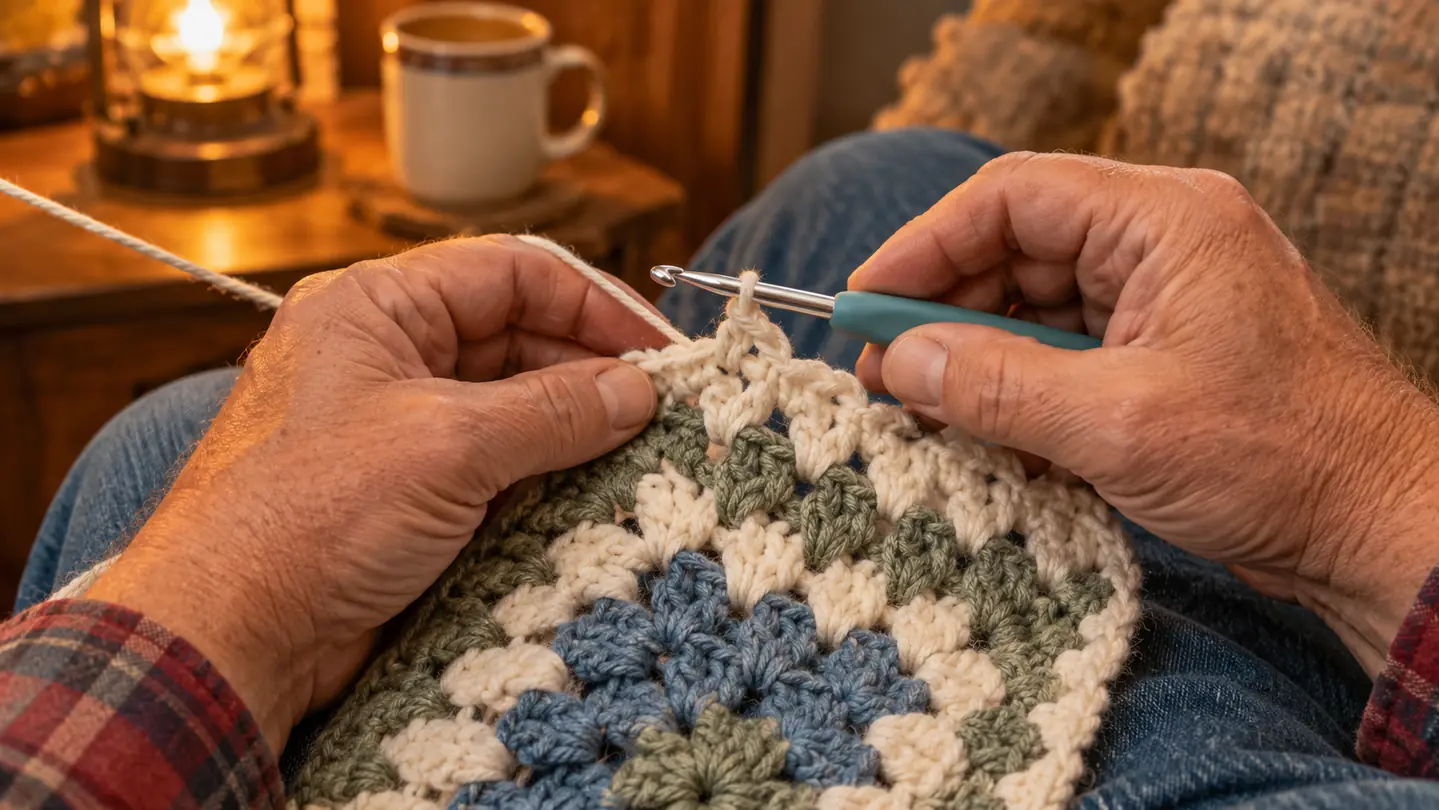
Where Susan Bates Wins
Here is what a plain aluminum hook does better, and I say it as somebody who just spent fourteen months praising the other one. It is lighter. The whole Clover set weighs 3.3 ounces, which sounds like nothing until you have held a bare aluminum hook in the same hand for the same hour and noticed the difference. There is no handle to rest against your palm, and for some crocheters that is the point, not the flaw. My husband Walt, who does not crochet but has listened to me talk about this at some length, says it is the difference between a pencil with a foam grip and a pencil. He is not wrong.
It is also one piece of metal with nothing to come apart. No grip to soften, no seam to split, nothing to wear through after a decade rattling around in a bag. Mine have been in and out of project bags since the late 1990s and they look exactly as they did. And you can buy one, in one size, instead of committing to ten at once. If you make dishcloths in one size and hats in another and nothing else, a set of ten is eight hooks you will admire and never touch. Dropping a Bates hook on the church hall floor is a shrug. Dropping a Clover is a small event, and you will spend the rest of the evening on your hands and knees.
If Your Thumb Is What Ends the Evening, This Is the Set I Would Hand You
Ten hooks, fourteen months of use, and a thumb that now lasts about twenty minutes longer than it used to. Today's price is on the listing, and the set has not changed in any way that matters.
Amazon Check Today's Price on Amazon →The Part Nobody Explains: Inline and Tapered Heads
Most hook comparisons stop at sizes and never mention the thing that actually decides whether you enjoy the tool. The head shape does more for your hand than the handle ever will, and nobody at the yarn table brings it up. An inline head, which is what the Susan Bates Silvalume has, sits in a straight groove. The tip catches the yarn squarely and holds it there while you pull through. A tapered head, which is what the Clover has, narrows gradually from the shaft toward the tip, so the stitch slides up and off in one motion. Neither is better. They are two different ways of doing the same job, and your hand will have an opinion within an hour.
I learned on an inline head, from a library book propped in front of a mirror at twenty nine, so the straight groove is the one my hand understands. Moving to the Clover took me about a week to stop fighting. The tapered head wanted the yarn delivered a little differently and for a few evenings my gauge wandered, which for a baby blanket is a real annoyance and for a dishcloth is not. Then it settled. Now I move between the two without thinking, though I would not want to be learning an unfamiliar stitch on an unfamiliar head.
For left-handers, nothing in either head is handed. The difference is in the hold, not the direction of travel. What catches people out is tension. An inline head is more forgiving if you crochet loosely, and a tapered head is more forgiving if you work tightly, which I do. So if you have been fighting your stitches for years and cannot say why, try the other head shape before you decide your hands are the problem. That is cheap advice and it took me three decades to hear it.
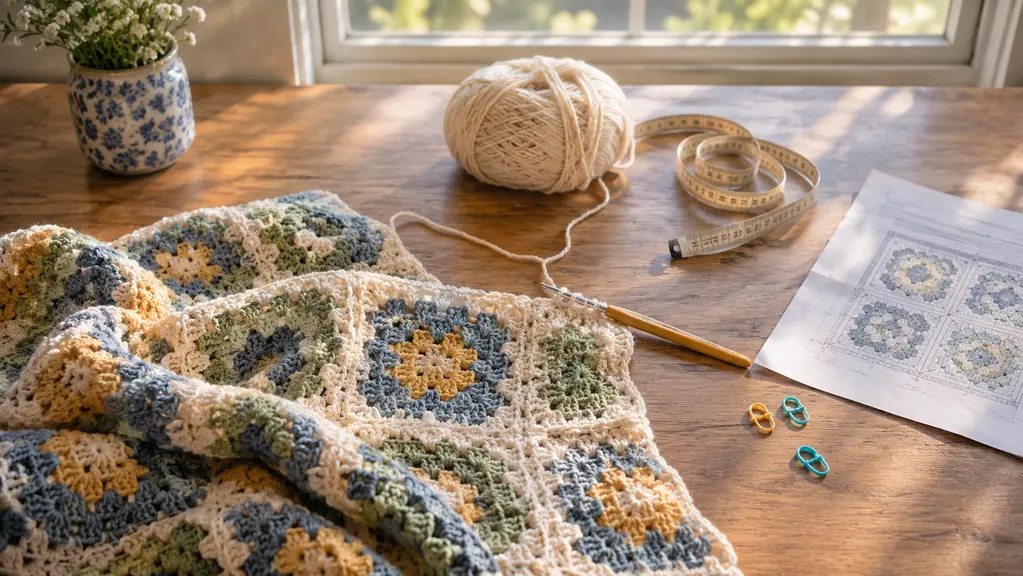
Ten Sizes, and What To Do With Them
The Clover set is ten hooks, from the smallest sizes up through J. In practice I use the G and the H for nearly everything, and the rest sit in the zippered case that came with my project bag. That is the honest report on a set of ten: two of them earn their place, four more get used when a pattern insists, and the smallest ones are there for the day a thread project shows up. I do not regret having them. I would regret having paid separately for each one, one pattern at a time, over a series of years.
There is no case in the box. Ten loose hooks arrive together and it is on you to find somewhere to keep them, which I did not think about until the second week when I could not find the H anywhere and turned the armchair upside down. If you buy the Clover set, plan for a case or a pouch on the same day. My solution was to use the zippered case out of my canvas project bag and keep the hooks in it permanently, with the gloves in an outside pocket. A cheaper answer is a pencil case from the school supply aisle, which is what my daughter Beth used for hers.
The Bates hooks need none of that planning. They live in a jam jar on the kitchen table and have for years, one per size, and when a size goes missing I know because the jar has a gap in it. There is a real argument for a system where a lost hook is a shrug rather than an evening lost to searching. I am not going to pretend the Clover wins on that, because it does not.
What Fourteen Months Actually Changed
Fourteen months in, here is the plain accounting. My hands are not fixed. I still stop, and cold weather still leaves the base of my left thumb stiff at the end of a long evening. No hook is going to change that and I would be doing you a disservice to suggest otherwise. What changed is when I stop. I get through the row I planned instead of quitting halfway and telling myself I meant to. That is a smaller claim than most reviews make. It is also the true one.
I also added a pair of Dritz Crafters Comfort gloves in February 2026, size medium, which are a touch roomy on my small hands and I say so every time it comes up. I wear them for any session over an hour and in cold weather. The grip plus the gloves is what got me through last winter's blanket, the one that went to the church drive in November. The chair matters too. I am five foot one and my feet do not reach the floor flat in most armchairs, so there is a footstool under my feet by the front window or my back pays for it by nine o'clock. Hands and posture are one problem, not two.
The complaint I will keep making is the one I made in week one. The handle is bulky. It does not fit in the small project pouch I take to the church hall, so the hooks travel in the zippered case instead and the pouch holds stitch markers and a measuring tape. If you work small, tight projects with your face close to the fabric, that bulk will bother you more than it bothers me, and you may prefer the bare hook for that work. I keep a Bates hook in the pouch for exactly those evenings.
Twenty extra minutes before my thumb asks me to stop is not a transformation. It is most of a row, and some evenings that is the whole difference.
Who Should Buy Which
Buy the Clover Amour if you sit down for an hour or more at a stretch, if your hands stiffen when the weather turns, if you are left-handed, or if you have been buying one hook at a time as each pattern demands and would rather stop making that trip. Buy it if you want ten sizes in one go and you have a place to keep them besides the bottom of a tote. Do not buy it expecting your hands to stop hurting. Buy it expecting a smoother hour and a little more of it, which is exactly what I got, and be honest with yourself about the bulk of the handle before you commit.
Stay with the Susan Bates Silvalume if you crochet in twenty minute stretches at the kitchen table, if you want one hook and not ten, if you have used an inline head since you learned and you like how squarely it catches, or if you work in the car and in waiting rooms where a hook gets dropped and lost. There is nothing wrong with the plain hook. It carried me through thirty years, four baby blankets and more dishcloths than I could count before I ever thought to question it. The Clover is better for me now. That is a statement about my hands at sixty four, not a verdict on the hook that got them here.
The Hook I Reach For On Winter Evenings
Fourteen months, one set of ten, and it lives in the zippered case of my project bag beside the chair. If your sessions run long and your thumb decides when they end, this is the one I would hand you at the yarn table.
Amazon See the Clover Amour Set on Amazon →