
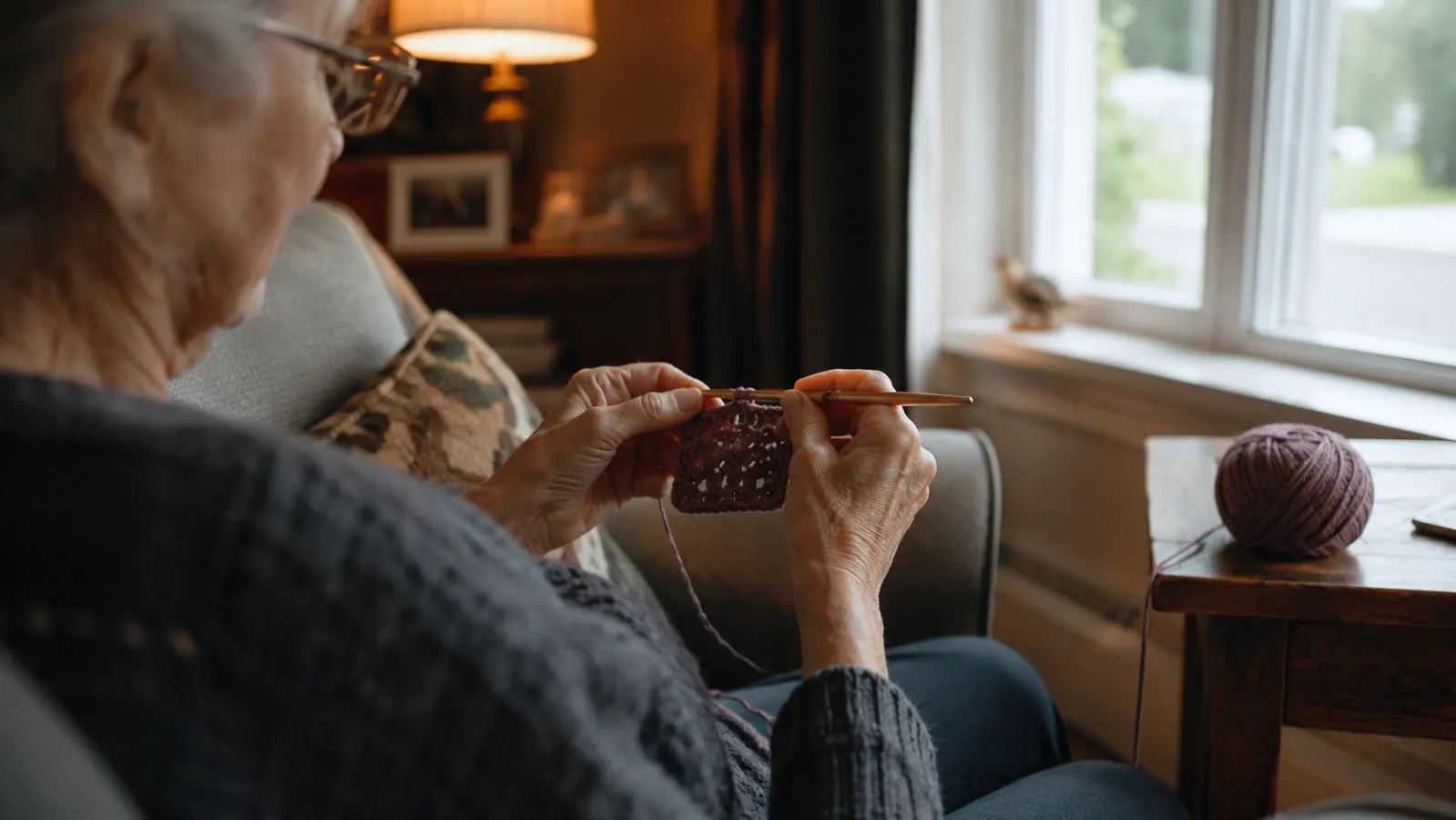
The pattern says H-5.00mm and the yarn band says worsted, so you buy the H, and four inches into the first row you can already tell the fabric is stiff as a coaster. Or the opposite happens and it drapes like a wet dishrag. Neither one is a character flaw. It is a size question, and most of us were never taught how to answer it.
I have crocheted for about 35 years. For roughly 30 of those I owned a small tin of plain aluminum hooks and guessed at every size decision, usually by holding two of them side by side and squinting. In September 2025 I bought the Clover Amour set, ten hooks running from B-2.25mm through J-6.00mm, each one a soft, warm-to-touch grip on a polished aluminum hook. It is the first time in three decades that answering the size question took less than a minute.
Here is what I wish someone had told me at the start. Hook size is not one decision. It is a yarn decision, then a pattern decision, then a gauge decision, then a hand decision. Five steps, in that order, and the order matters. Skip the first one and the other four are just guesswork with extra arithmetic.
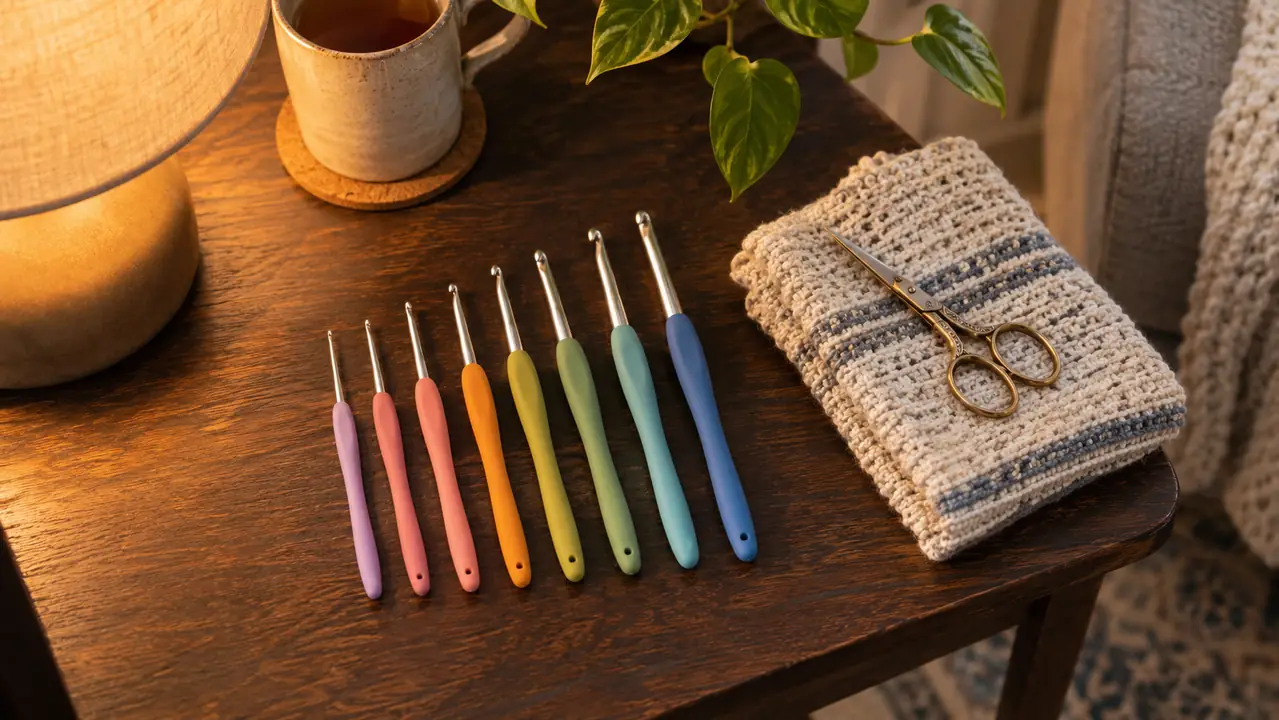
Ten hook sizes in one set, so the answer is already in the drawer
The Clover Amour set covers B-2.25mm through J-6.00mm with a soft, warm-to-touch grip and a polished aluminum hook. It is the set I reach for first, and the one I hand to anyone who is tired of buying hooks one at a time and hoping.
Amazon Check today's price on Amazon →Step 1: Start with the yarn weight, not the pattern
Yarn weight is the first filter. A fine sock yarn at 2.25mm to 3.00mm wants a small hook so the fabric holds its shape and does not sag at the heel. A worsted acrylic wants 5.00mm to 6.00mm so the stitches stay loose enough to drape. Pick the hook before you pick up the yarn and you are guessing, and guessing is how a hat turns out the size of a potholder.
Look at the band on the skein. Most yarns list a recommended hook range in millimeters right beside the recommended gauge. That range is a starting point, not a law, but it is a good one. Write it on the back of the pattern so you are not flipping the band over every ten minutes. Then open the Clover set and take out the hook in the middle of that range, not the top and not the bottom. You want room to move in both directions once you swatch.
The set covers a lot of ground, but I want to be plain about where it stops. Ten hooks from B-2.25mm up through J-6.00mm handles fine sport weight, worsted, and most of the bulky hats I make for the church winter drive. It does not go above J. If you are working super bulky yarn or a jumbo blanket, you will need a K or larger, and this set will not help you there. A set that claims to do everything usually does nothing well. This one does a defined range very well.
Step 2: Read the millimeter number first and the letter second
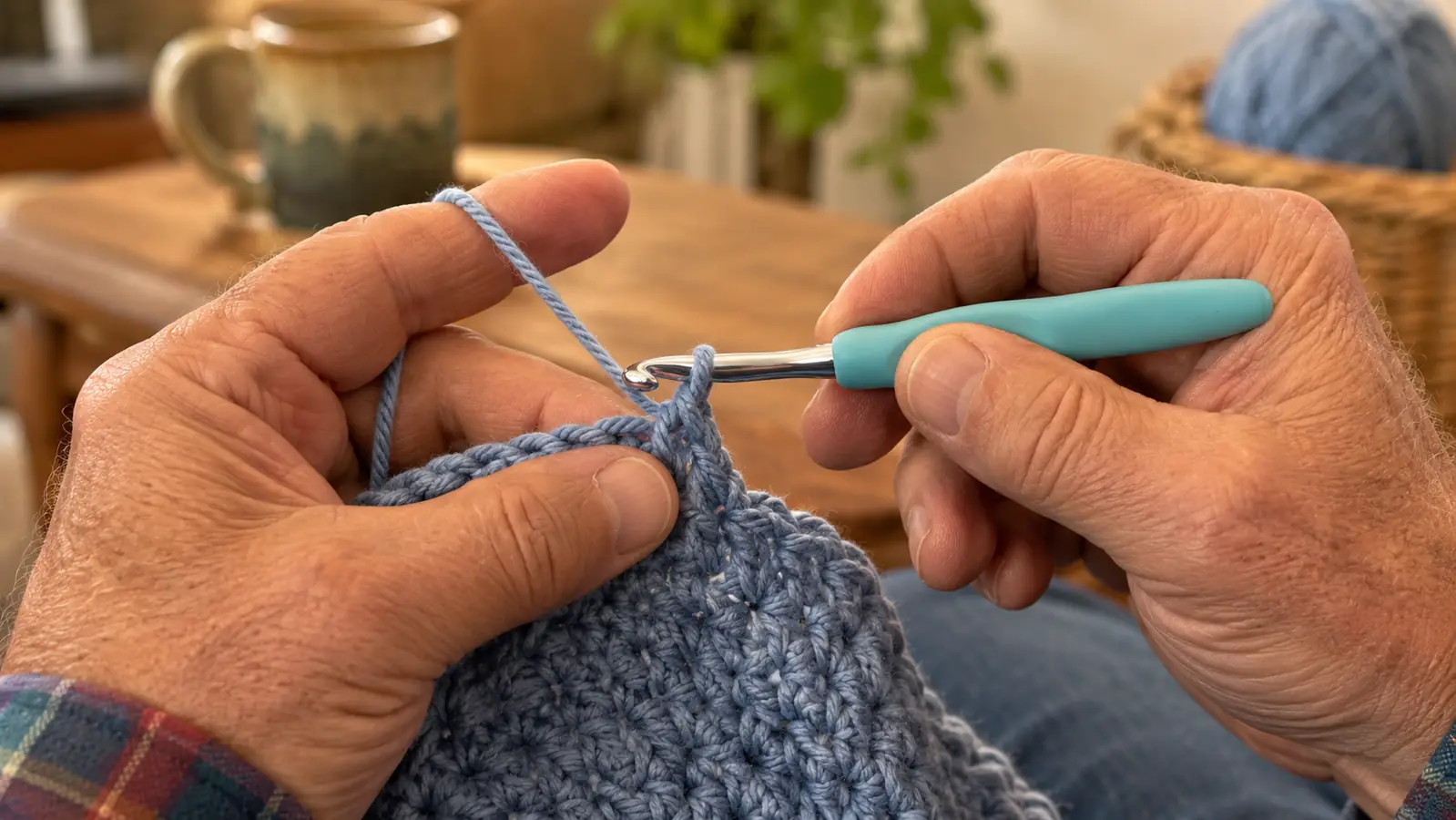
US hook letters are not standardized the way you would expect. An H from one company can measure slightly differently than an H from another, and vintage hooks are their own country entirely. Millimeters do not move. Almost every modern pattern lists both, and when it does, trust the number. If a pattern gives you only a letter, look up the millimeter equivalent for the brand of hook the designer used, not the brand sitting in your hand.
This is where a labelled set earns its keep. Each hook in the Clover set carries its size on the handle, so you are not holding one up to the window trying to remember whether the one with the worn spot is a G or an H. I know women who have crocheted for forty years and still keep a gauge ruler in their bag. There is no shame in that. The shame is in finishing a sweater in the wrong size because you were too proud to check.
Step 3: Swatch, measure four inches, and move one hook at a time
Make the swatch. Four inches by four inches, in the stitch the pattern uses, and measure it after you have washed and dried it the way you plan to wash the finished piece. If your four inches holds more stitches than the pattern promises, your stitches are small, so go up a hook size. If it holds fewer, go down. That is the whole method. It is not a trick, it is measuring, and measuring is the part everyone skips.
Most of the time you will be one size off, not four. That is exactly why a set that runs in small increments is worth keeping together. Going from a G-4.00mm to an H-5.00mm is a full millimeter, and a full millimeter is a real change in fabric. In practice I swatch with the recommended hook, measure, then move one hook up or down and measure again. The second swatch costs ten minutes and saves the project.
Within about two weeks of switching from my old plain aluminum hooks to the Clover set, I could work roughly twenty minutes longer before my thumb asked me to stop. That is not a cure for anything. It is a softer handle.
One more note about swatches and then I will leave it alone. A swatch is also the cheapest way to find out whether you like the hook. Hold it for the whole four inches. If the grip is fighting your hand, you will feel it before the square is done, and you will have learned something worth knowing before you commit four hundred rows to it.
Step 4: Match the hook to your hand and to the length of your session
A pattern can tell you the correct size. It cannot tell you the correct size for your hand at nine o'clock at night after an hour of work. This is the part of hook choice that nobody writes about, and it is the part that matters most to me at 64 with mild stiffness at the base of my left thumb.
I hold my hook in my left hand and work right to left, mirrored from what most instructions show. That means I cannot use a hook with a shaped thumb rest built for a right hand, because the flat lands in the wrong place and my thumb rides the edge of it all evening. The Clover grip is symmetrical, so there is nothing to work around. I noticed that in the first week and I have been grateful for it every week since. For a left-handed crocheter, a symmetrical handle is not a bonus. It is the whole ballgame.
Session length changes the answer too. For a twenty minute dishcloth, any hook in the drawer will do. For a three hour baby blanket, the handle becomes the deciding factor and the metal hook becomes secondary. The whole set weighs 3.3 ounces, so carrying all ten is no burden, but a single handle is bulky enough that it will not slip into a small project pouch alongside a notebook. I keep the working hook out on the side table and the rest in the zippered case.
Step 5: Know where the set ends, and label what you have
The Clover set stops at J-6.00mm at the top and B-2.25mm at the bottom. That covers the great majority of what I make, but not all of it. Below B you are into steel hooks for thread work, which are a different animal entirely, thin and short and not part of this set. Above J you have the K, L and larger hooks for super bulky yarn, and those you buy as singles. Knowing where a set ends is just as useful as knowing what is inside it.
The rest of this step is boring and it will save you an hour a week. Label things. Keep the hooks in order in the case, smallest to largest, and put them back in order when you finish for the night. Mine live in the zippered case that came with my project bag, and I can find the H without looking. Before that I kept them loose in a canvas tote and spent a good part of every session digging. Thirty-five years of crocheting, and the single biggest improvement to my evenings was a case with a zipper.
What Else Helps
Two things besides the hook do more for my size decisions than any chart on the internet. The first is light. My floor lamp stands at my left, which means my left hand throws a shadow straight across the stitches I am trying to count. I bought a Glocusent neck light in October 2025 and wear it on the warm white setting at medium, evenings after dark, on top of the lamp and never instead of it. Counting stitches in a shadow is how you convince yourself the gauge is right when it is not. It also shuts itself off after 30 minutes, which is mildly annoying in the middle of a long row.
The second is a yarn bowl. I bought a Little World wooden one in December 2025, about six inches across and three inches tall, and it sits on the side table to my right, feeding yarn across to my left hand. Before it, the ball rolled under the chair roughly once an evening, and I would stop, get up, and lose my place in the row. That is not a hook problem, but it is a tension problem, and tension is exactly what a gauge swatch is measuring. A ball that pulls unevenly makes uneven stitches, and uneven stitches send you hunting for a different hook size when the hook was never the trouble.
For sessions over about an hour, and in cold weather, I pull on a pair of Dritz Crafters Comfort gloves in size Medium, cotton with open fingertips. Medium is a little roomy on my small hands and I will say so plainly. They keep my hands warm, and by about the second week I noticed I was less stiff at the end of an evening. Comfort only, nothing more than that. They live in an outside pocket of my CRAFTISS bag, which holds the current project, and that bag rides in the car when my husband Walt and I make the two hour drive to see our daughter. At five foot one I carry it by the top handle rather than the shoulder strap, because the strap hangs too low on me.
One labelled set, ten sizes, and the swatch stops being a coin flip
If you are still picking hooks out of a tin and squinting at them, this is the upgrade that ends the guessing. Ten sizes, each stamped and easy to find in a case, with a grip that does not punish a left hand.
Amazon Check today's price on Amazon →